Category: Car Reviews

New and used car reviews at the most honest way possible, muscle car review magazine, car stereo reviews, smart car reviews, car and driver reviews, car reviews from consumers.

  • Toyota Aqua launched in Japan as the smallest Toyota’s hybrid

    Toyota Aqua

    The Toyota Aqua launched in Japan on Monday after its first debut at the Tokyo Motor Show about one month ago. The Aqua is also known as Toyota Prius C outside Japan and it will be available in the U.S in 2013. It is a four-door hatchback that is seems to be the biggest competitor for the Honda Fit. The Aqua is currently the smallest Toyota hybrid car in the market.

    What about the performance? The Aqua is powered by a 1.5 liter engine rated at 72 hp and a 45 kW electric motor. It consists of two driving mode – ECO Mode and EV Mode. Under Japan’s JC08 test cycle, the Aqua has the fuel efficiency of 83 mpg and achieves 0 to 100 km/h in 10.7 seconds. As what we see, the 83 mpg is one big selling point for the car because it has an extra 32 miles compared to the best selling Toyota Prius.

    What we say about the look? No other words, we “Wowed!!” It looks really nice like the son of Toyota Prius. A little bit similar to the Prius but also a little bit feel like the Toyota Vios. The most attractive part with the rear view is the rear lamp. This time, Toyota designed it in a different way. It looks silky smooth and alert the drivers who follow the car at the back.

    Toyota Aqua interior

    What we say about the interior? The interior makes car lovers really want to sit in and have the grip on the steering wheel. There are several buttons on both left and right side of the steering. Driver can control the stereo volume and air-condition temperature. A standard double din stereo is fitted in the middle. The stereo design looks little bit outdate to match with the hybrid system. There is also an auxiliary port and USB port in front of front passenger seats.

    At the dashboard, it also features a digital speed meter where most of the people always wanted. The meter look nice with all the important dashboard symbols. A digital speed meter always makes a car look a little bit “high technology” than others. This could be one reason why the Honda Civic is the best selling cars because it was the only few cars with digital speed meter when it was launched. Another thing in a plain sight is the gear knob. It was designed with really nice blue interior lights. The interior is available in four colors – Earth brown, fresh green, cool blue and natural gray.

    Price range? Currently the Aqua is available in Japan from 1.69 million yen to 1.85 million yen in three grades – L, S and G.

    What is not so good about the car? Definitely is the car name. Aqua means water in Latin, but it means transsexual in Hokkien language which widely used in Singapore, Malaysia, Indonesia, and some other Hokkien villages. Luckily, Toyota named it Prius C for market outside Japan. Now we need to add the name Aqua to the list of car names.

    Safety features in the car include ABS brake assist and Toyota’s famous VSC hill-start assist. Overall, we love the car and we look forward to see Toyota hit the sales at 12,000 Aquas a month in Japan as what they wish.

  • Honda Civic: It still smells new after runs for one hundred thousand km in five years

    Honda Civic front view

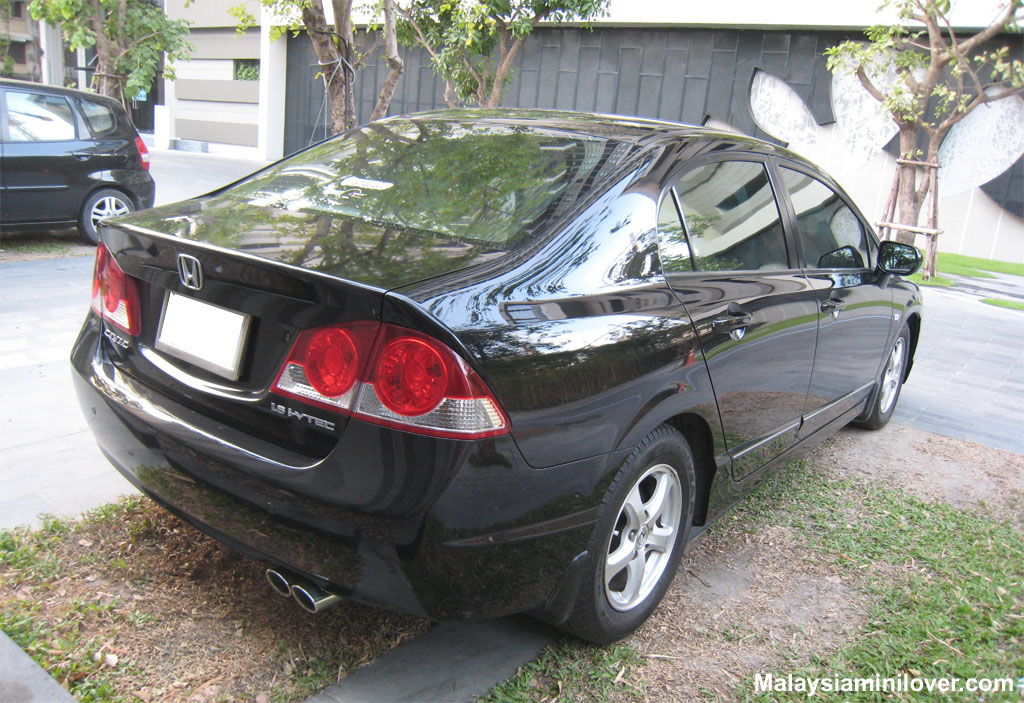
    Thanks to Ashley who invited us to check on her car, here we got a chance to write a detail used car reviews on her 2007 Honda Civic. Ashley bought the Honda Civic back in February 2007. It is just about a year after the eighth generation of the Civic has been introduced. The model year is 2007 and it is an Asian model which also known as Civic FD.

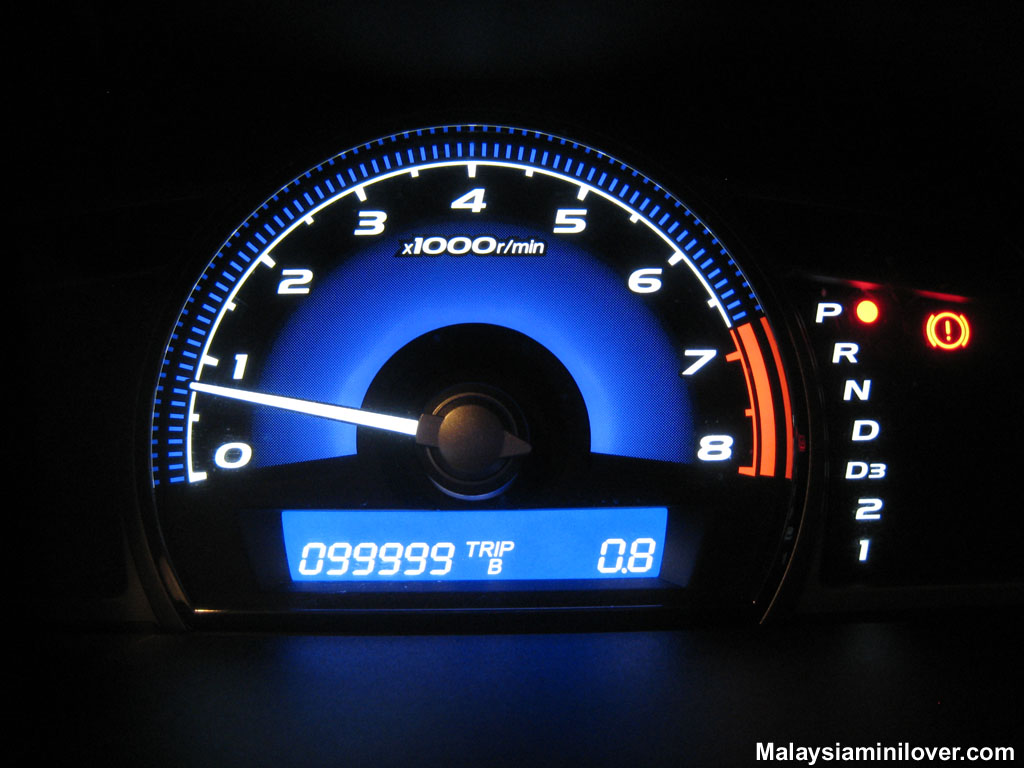
    The reason why Ashley invited us to review on her car is because the mileage is going to hit 99999 km today. And yes, we are the lucky one who rides in the car with her from 99999 km to 100000 km. We drive the car up hill, down hill and also try some corners with higher speed. We also test the car at speedway up to 170 km/h and the result is really impressive. The car feels stable at 165 km/h and started to feel a little “windy” when the speed hit 170 km/h. Boy, don’t try this at normal way.

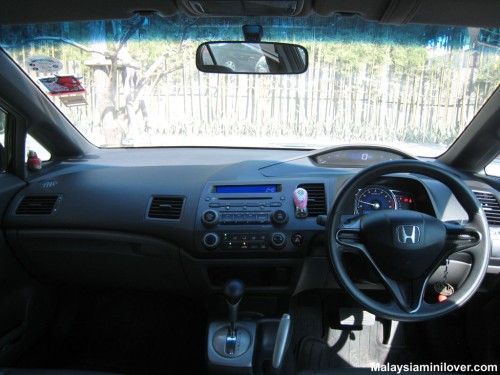
    Honda Civic interior dashboard

    How the car was taken care? The car we are reviewing is owned by a single lady at 30 years old. She bought the car when she was 26 years old. 100,000 km for 5 years is quite an average based on our study. Each year runs 20,000 km is somehow average for a car that travel roughly 50 km a day. The owner maintains the car follow the basic car maintenance schedule as suggested in the owner’s manual. Engine oil get changed every 5,000 to 10,000 depending on the oil grade. Brake fluid, auto transmission fluid, and oil filter was changed on time too. According to the owner, spark plug only changed twice since new and the brake pad was replaced when the car hit 70,000 km. Four tires were replaced when 80,000 km when the thread almost finish. We noticed that the only thing didn’t change on time is the air filter. It is dirty and not really in good condition. The car also went to car wash every two weeks and interior gets polished every three months with cheap polish kits purchased from Tesco.

    Total maintenance cost over ~5 years

    For the first few times, Ashley brought the car back to Honda for maintenance and services because it is free and under warranty. After that she feels it is unnecessary to have a nice café to sit while waiting for the car so she brought to a trusted mechanic for cheaper labor cost. This is the rough estimation of what she has spent for the car over ~5 years.

    • Engine oil, oil filter, and services: RM220 x 10 times = RM2,200. Each time for 10,000 km.
    • Car Tires: RM1,200 for four
    • Spark plug: RM60
    • Transmission fluid: RM80
    • Brake Fluid: RM50
    • Air-cond fan and AC gas: RM380
    • Total: RM3,970. The amount is really amazing.

    Update: At the ninth years, the owner, Ashley contacted us saying the car has reached 117,000 km (72,700 miles) and she has replaced the engine motor mount.

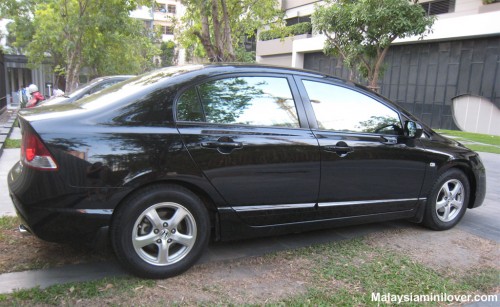
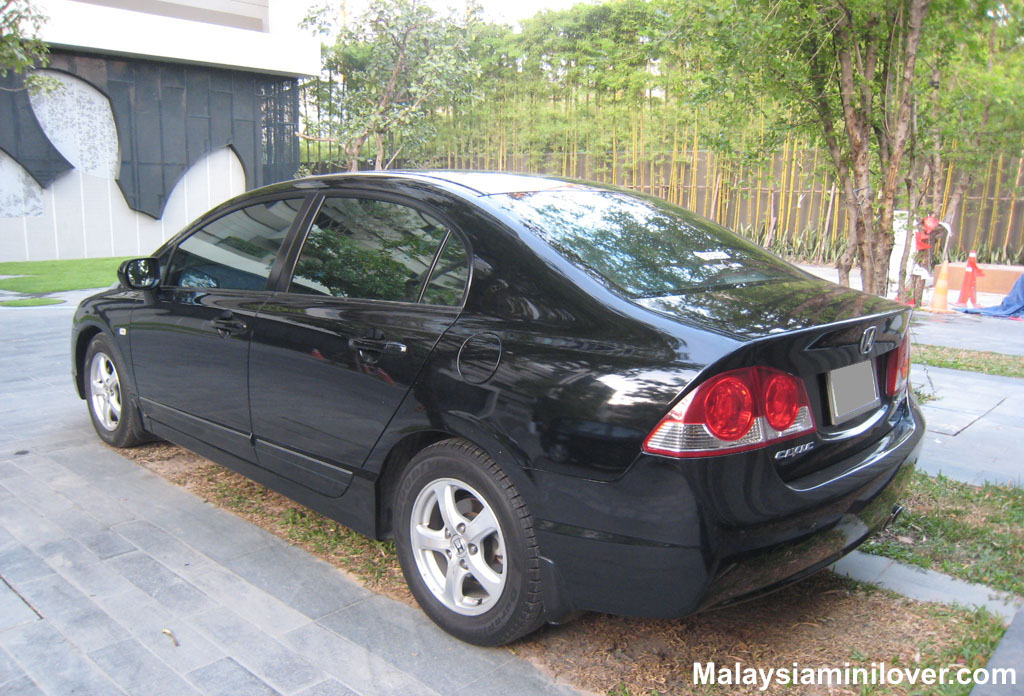
    Honda Civic side view

    What is good about this car? It tastes like a new car. The 1.8-liter 16 valve chain-driven SOHC i-VTEC engine gives the maximum 140 hp @ 6,300 rpm and maximum torque 174 Nm @ 4,300 rpm. As we mentioned above, the car is still stable at 160 km/h after putting 100,000 km on it. Cornering, up hill, and braking is pretty good too. The 1.8-liter has enough power for us although there are rumors said that it is under power. May be the rumors were compared to the 2.0S model.

    What isn’t so good about this car? The color of the rubber surrounding the car window at four doors is faded and need replacement. It has never been changed before. According to the owner, the air-condition start giving problems when the car runs 80,000 km. The air-condition fan was spoilt and it was replaced. At the moment we test drive the car, the AC pulley is seems not in good condition too. It causes the AC not cold enough when the car stuck in traffic jam.

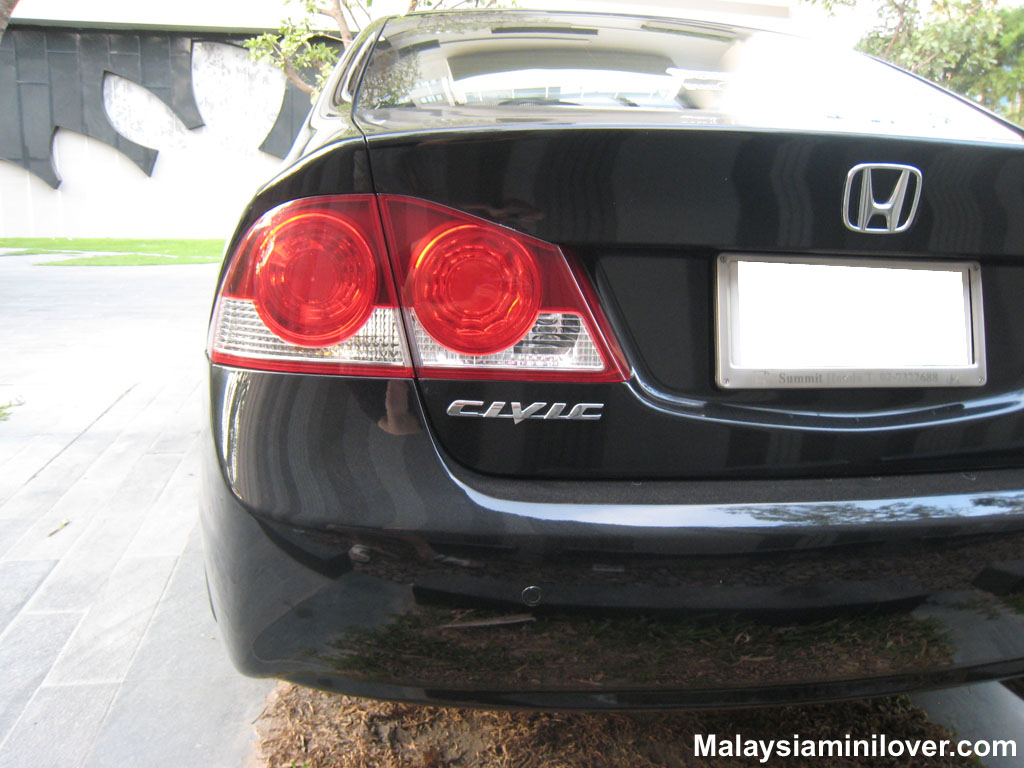
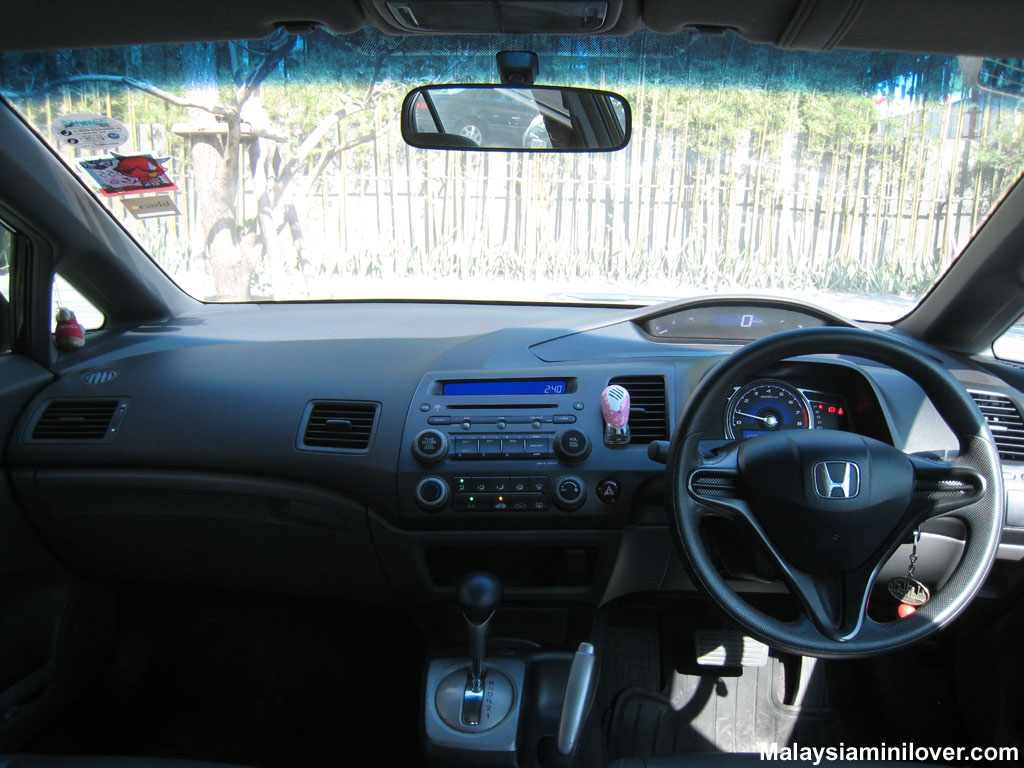
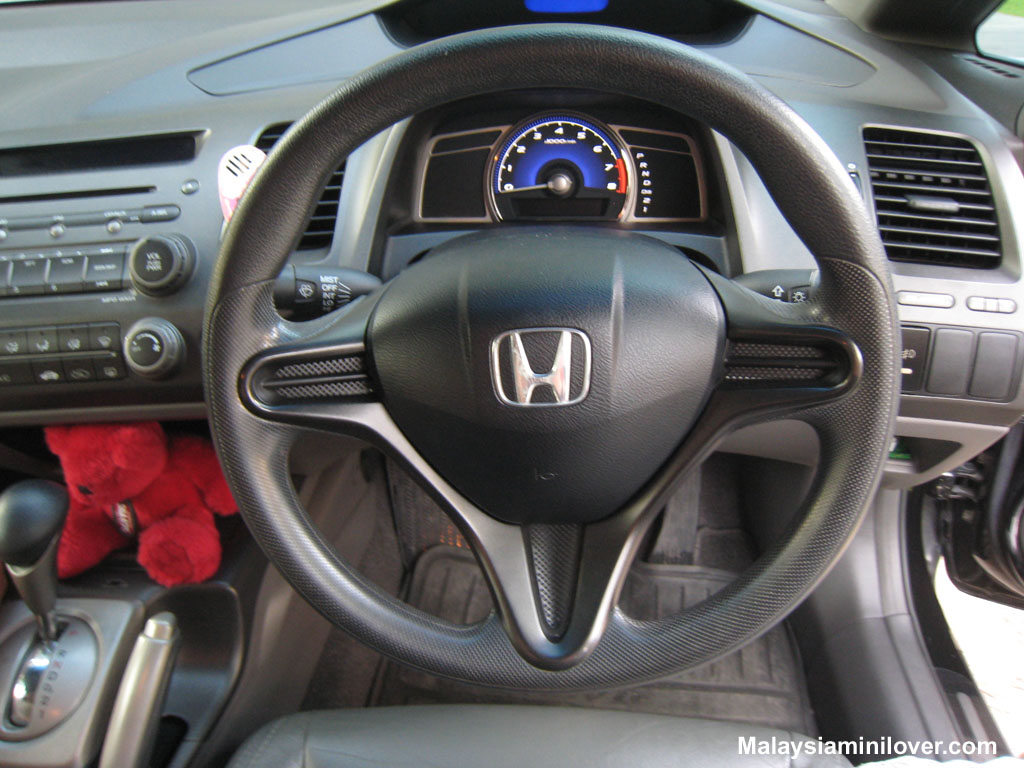
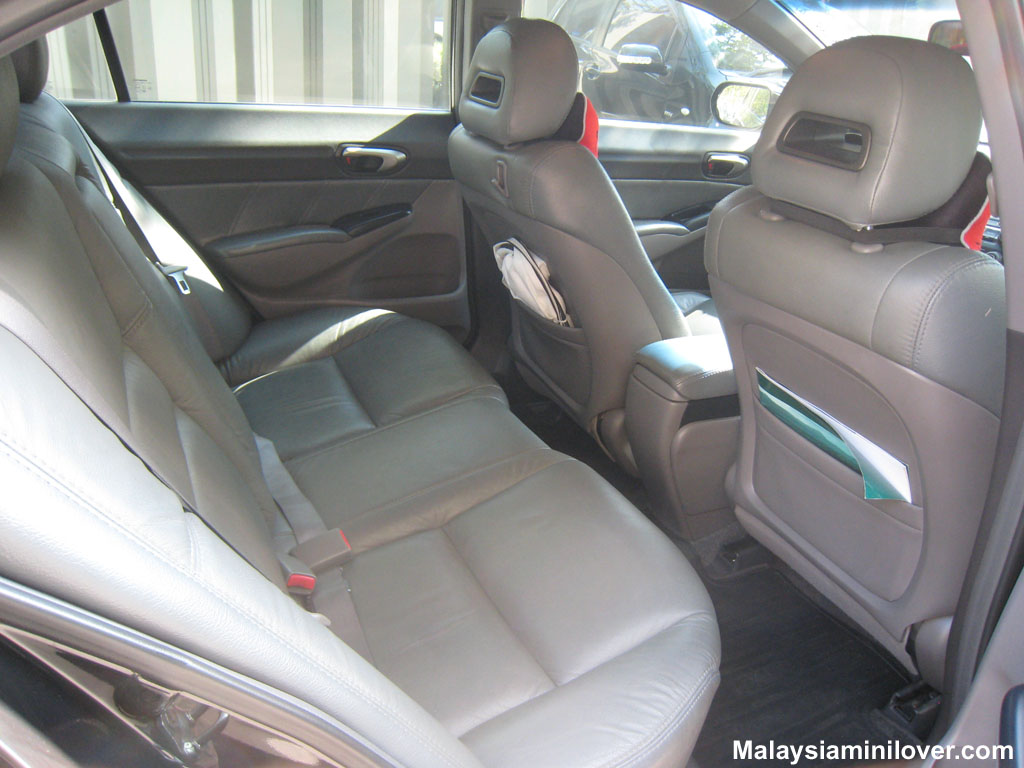
    What about the look? As for the exterior, the car still looks brand new. The headlights didn’t become yellow like some of the cheap cars do. The rear lights, exterior logo, grill, bumper, and windscreen are still in good condition. For the interior, dashboard did not have any crack although it often park under hot sun. The only thing spoilt is the Honda logo at the steering wheel which is a little odd.

    What about the safety features? The car has a good braking system with ABS assisted. Front is using ventilated disc and rear is using solid disc. It also comes with dual SRS airbags, security alarm system.

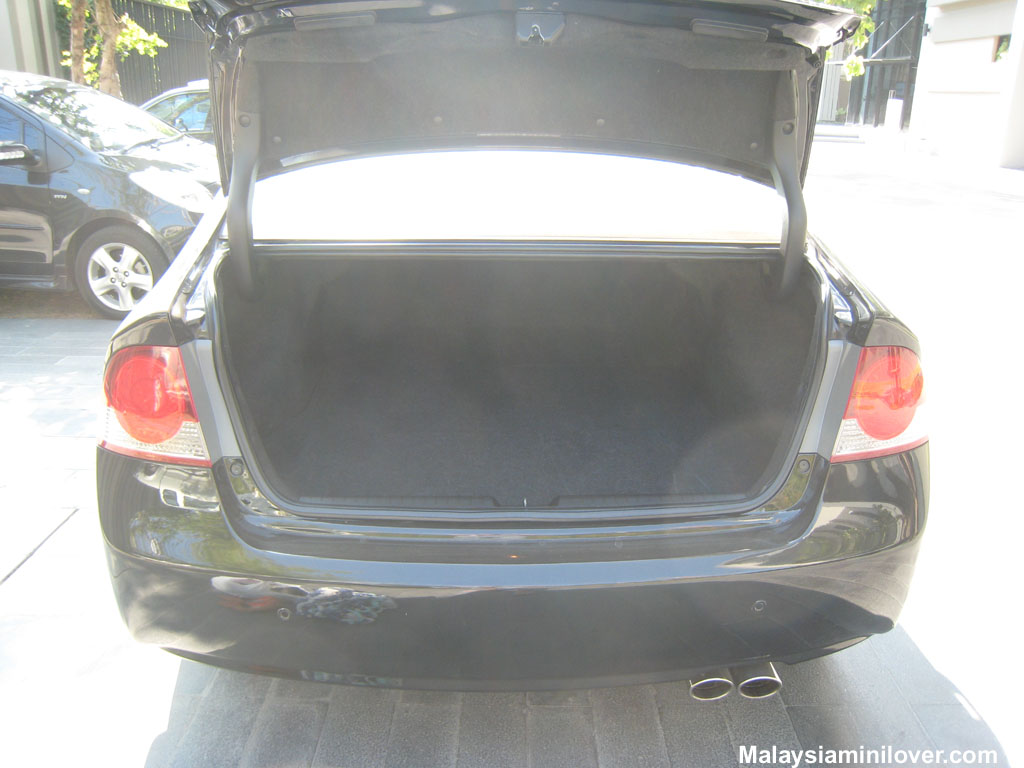
    Any extra point for it? Yes the car boot is big enough for few large luggages and the fuel consumption is low.

    Price: There are three models available from Honda, the Civic 1.8S, Civic 1.8S-L, and the hotter model Civic 2.0S. 1.8S is basic model without leather seat from the price of RM114,980, 1.8S-L is RM119,980 and the hotter 2.0S is from RM130,980.

    Honda Civic’s competitor or similar car: Toyota Corolla, Nissan Sylphy, Mazda3, Peugeot 308, Kia Forte, Chevrolet Cruze, Volkswagen Polo, Ford Focus, Mitsubishi Lancer, and Proton Inspira.

    In conclusion, the Honda Civic is definitely still smells as good as new car after almost 5 years of driving with 100,000 km run.

    Honda Civic interior    


  • Kia Ray EV launched: Korean’s first electric car

    The Kia Ray EV has launched today in South Korea. The Kia Ray EV is the first 100% Korean made plug-in electric car that has the sound of petrol engine. The first EV car in Korea had give a promise to their customers that the car is able to travel up to 86 miles (139 km) on a single charge depending on the driving style. A normal charging time is six hours from normal 220V household electric plug. A fast-charge option is also available for the Kia Ray for whoever wants to refill the electricity in just 25 minutes.

    The Kia Ray shares the same production line with the 1.0-liter petrol powered Ray CUV in order to supply to the domestic Koreamarket. This is good because when Kia developing the EV, they can still adopt the characteristic of what a petrol-powered car should has especially the exhaust sound!

    Kia Ray EV dimension

    What about the design? The Kia Gay EV, Opps, sorry, it is the Kia Ray. For us, it did looks a little bit gay with the dimension of 1,595 mm in width x 3,595 mm in length x 1,710 mm in height. The car is design to look just like the petrol-powered Ray. It has a petrol cap just like others but it is the inlet for fast recharge mode. Both front doors have the word “Zero Emissions EV”. With a square design, 14-inch alloy wheels are best for it. There is also an inlet for the normal charging which hide behind the front grill. As for the boot, it can’t fit in an extra large luggage. At most it can only fit in a new shoe boxes.

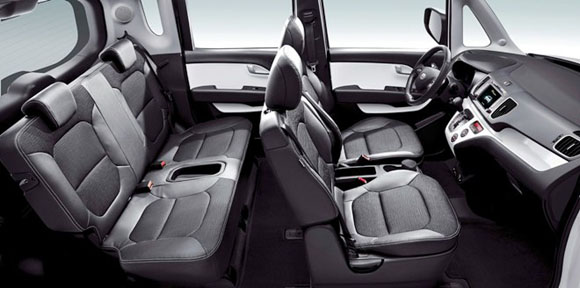
    What about the interior? The interior is quite beautiful. It has a three round meter in front of driver with beautiful lights. It is spacious for passengers head due to its height.

    Kia Ray EV interior

    What about the performance? Kia Ray EV is a front-wheel drive car powered by a 50kW electric motor. Sounds a little weird because most of the time we will say “powered by a 4-liter V8 engine”, but soon we may have to compare cars with kW. The main battery used in the car is a high-capacity 16.4 kWh lithium ion polymer battery and it is hiding under the rear seat and cabin floor. The battery is also said to have a 10-year life cycle. Let’s review it again in 2021. From zero to hundred, the record is 15.9 seconds and the top speed is 130 km/h (81 mph).

    Whatever the performance is, we always give our full support to EV because of the zero-emmissions. Remember that previous we mentioned that we want a muscle car EV in our world that has everything just like ‘60s muscle cars including the V8 sound? At least the Kia Ray did it with recorded gasoline engine noises. It is an EV with petrol engine sound which not only makes the car lively but also to alert pedestrians.

    What about safety features? The Kia Ray EV has six air-bags, electronic stability features, and downhill assists control.

    Any special features? The car features an EV navigation system which tells the driver the where the closest recharging stations are. This is quite helpful because within few years there won’t be much electric recharging stations. The car features two driving preference, ‘E’ for eco and ‘B’ for brake. ‘B’ is specially design for the car to handle downhill or mountain roads like Touge. The way to open the car door is special, why? For the driver side, both door handles are stick together. The driver door open as usual but the rear is sliding door. On another side, both doors are opened like usual car. This is what makes this car “special” in open.

    Kia Ray EV’s competitor or similar car: Nissan Leaf, BMW MINI E, Citroen C-Zero, Mitsubishi I MiEV, Smart ED, Tango, Tesla Roadster, Chevrolet Volt, and Th!nk City.

    This is the first trial for an EV in South Korea, so don’t expect the Kia Ray EV will reach our country in a short time. South Korea is far from us to travel by an EV.

  • Toyota Estima: A reliable MPV that serves its passenger until heaven

    Okay, we have no intention to frighten you not to buy this car. We are going to review the Toyota Estima based on it’s performance, features, outlook, engine, and talk about what isn’t so good about this car as well as it’s competitor.

    Toyota Estima or more commonly known as Toyota Previa in the US or Toyota Tarago in Australia was an MPV introduced in 1990 by Toyota. Within 21 years of time frame, the car received a total number of three generations until today. First generation was from 1990 to 2000, second generation was from 2000 to 2006, and third generation was from 2006 until today.

    We would really like to say this is a very spacious and roomy car otherwise the Nirvana Memorial group will not pick this as one of the main car to deliver corpse in coffin or casket. The average length of a standard casket is about 84 inches long, 28 inches wide and 23 inches tall. So we say the Toyota Estima is really spacious.

    What about the outlook? Big, spacious, and gorgeous. In 2009, the car received a new facelift. The front look of the car is slanting. It looks like the elephantnose fish where it has a long chin but it is nice.

    What about the features? A car that is so spacious will be hard to drive without some special features. The Estima feature an automatic parallel and back-in parking, where drivers can easily get the car park with the control panel. The second row is fitted with automatic footrest and third row seats are power-fold.

    What about the engine? The latest Estima is available in 2.4 L or 3.5 L. 3.5 L has enough torque and you will undeniably enjoy the driving. However, most of the people who purchased an Estima is prepare to have a chauffeur isn’t? The Toyota Estima is also available in hybrid version where you can buy it from Naza for RM 268,000.

    What isn’t so good about this car? Such a huge car with the curb weight at 1,845 kg without any passenger, consumer who owns the 2.4 L always claims that the car is lack of torque.

    Toyota Estima’s competitor or similar car: Toyota Sienna, Seat Alhambra, Peugeot 5008, Citroen C3 Picasso, Volkswagen Sharan, Dodge Caravan, Honda Odyssey, and Ford S-Max.

    As one of the best selling MPV in the market, there are more than 1000 units of used Toyota Estima available for sale at most of the time. In conclusion, the reliability, endurance, and maintenance of this car are without a doubt gets a good score. Otherwise Nirvana Memorial group will not choose this car as the main car to give their customer the last ride to the heaven.

  • Peugeot RCZ

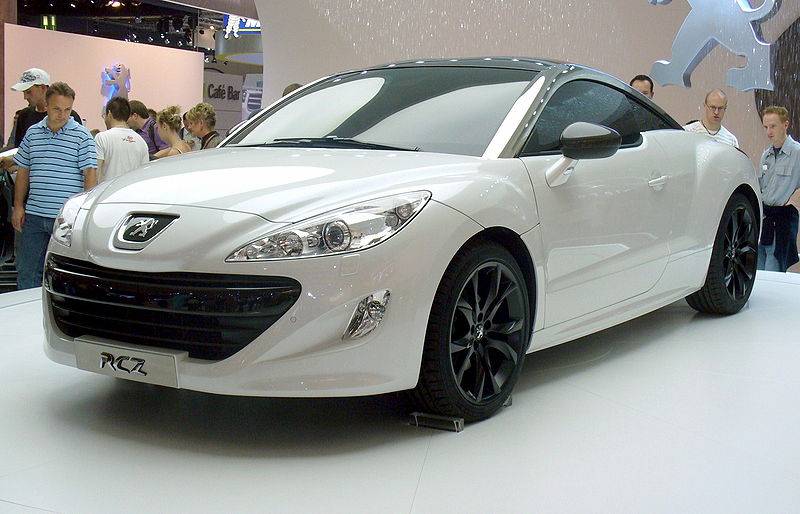
    Peugeot RCZ

    There is a lot of “Wow! Wow! Wow!” when everyone saw the first debut of the Peugeot RCZ at the Frankfurt Auto Show in 2009. The reason why there are so many excitements is because Peugeot fans has been long waiting for something new, fresh, and different from the French auto maker. It has been long time since Peugeot built cars that really get their fans excited about. And now, the RCZ finally make all the car lovers feel like having level 1 drugs when looking at it and top level drug when ride on it. (more…)