Category: Car Buying Guide

The ultimate car buying guide you need in order to get the best car you want with the best car loan and car insurance.

  • Money for car maintenance – Do you reserve it?

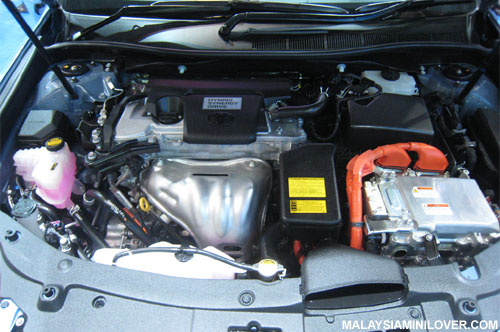
    Toyota Camry hybrid engine

    Imagine that an early morning you walk to your car park and start the car. You try to crank the car several times but it just doesn’t start. You make a call to the nearest mechanic and he comes over for $100 service charge. After half an hour checking, the mechanic tells you that the car must be towed to his workshop for further checking. You were told that he suspect some major parts is giving problems and that may cost at least $5000 to fix it. OMG! what are you going to do? You are forced to take a half-day emergency leave from your job on the day and it is headache to fork out an extra $5000 dollars to fix the car.

    In Malaysiaminilover’s car buying guide, we always mentioned that do not purchase a car by looking at the monthly car payment but look at the car price. For example, a $40,000 car could have two payment methods:

    1. Pay $40,000 cash and drive the car away from the showroom.
    2. Go for a car loan and pay roughly $900 per month over four years or 48 months loan term.

    Many consumers always look at the $900 per month but not the $40,000 car price. The real value of a car should be judged according to the performance, reliability, and second hand value (in the future). Most consumers always arrange 1/3 of their monthly salary to go for their desired car. However, they may forget about car maintenance which could burn their pocket a big hole after several years.

    Take a look at the case above. A person with take home pay of $3,000 per month is paying $900 for the car every month. He or she must at least reserve some money for the maintenance of the car. Please read the basic car maintenance schedule. There are several things we need to do every 10,000 miles. Engine oil, washer drain, and oil filter are the most common things that cost us a little money to maintain a car. When the car grow older, we will have to pay for some other parts such as element filter (air filter), spark plug, coolant, brake fluid, clutch fluid (for manual transmission car), automatic fluid (for automatic transmission car), and others. However, there are some situations where we need to pay extra money if certain parts worn out or spoilt. These thing could cost more than usual maintenance including air-condition compressor, radiator, brake pump, suspension, or even hybrid battery. Therefore, it is a must to reserve an adequate amount of money every month in case something wrong with the car and it is no longer under warranty. What do you think then?

  • What is unregistered cars and what is recon cars?

    Most of the first time car buyer or inexperience buyer must have come across “unregistered car for sale” when searching for the dream car. Often, these cars tend to have attractive price and it is usually lower then new car price. What does unregistered really means and why the price is lower than new car?

    Unregistered car is cars import from foreign countries and haven’t register at transportation department (JPJ) because these cars are waiting for its new owner. These cars could be new but at 99% they are all used cars from foreign countries. Sometimes or at most of the time, the advertisement will state the year make of the car like “2010 Unregistered Mini Cooper for sale”. In other words, these cars are reconditioned or used from foreign countries.

    Majority of the unregistered cars or recon car will not have 0 miles or less than 50 miles on the odometer because they are not brand new. They have been used in foreign countries by someone. This also explains that why these cars are cheaper than brand new car. In some car ads, you can even still see the foreign registration plate on the car. A 2010 reconditioned Mini Cooper may cost few thousands up to few ten thousands cheaper than the new one.

    Some consumers prefer to go for reconditioned car because it is cheaper. However, if you are unlucky, you may end up paying more for the car because spare parts replacement isn’t cheap. There are parts need to be replaced after few ten thousand miles has been put on a car engine.

    What is recon car?

    A car may be brought in to the country using AP (Approved Permit), student AP, working AP, foreign AP, or other kind of permits. Some of these permits are tax free. Therefore, the profit is quite high for used car dealers who are able to obtain these permits.

    With these permits, car dealers import some used cars from foreign countries, get them clean up and replace some necessary parts, and sell it as reconditioned cars or recon cars. Nevertheless, you will never see an advertisement tell you that “this is a reconditioned car” rather than “this is unregistered car”. In fact, they are all used cars. Reconditioned is just a better word to listen and sound more comfortable for buyer.

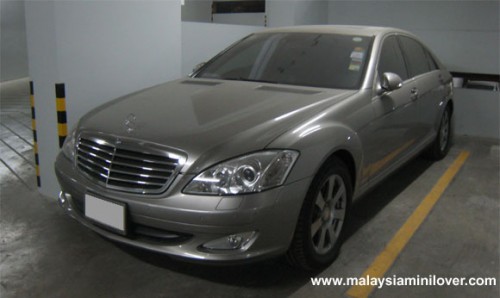
    Some car dealers will advertise their car like “03/09 Mercedes Benz SLK for sale”. This means the car is made in year 2003 and it has been import to the country and registered at 2009. Other than that, 2009/2011 means the car is made in 2009 but registered in 2011.

    In conclusion, whether you would like to pay less for a car with few thousands or few ten thousand miles on the odometer or you would like to pay more for a brand new car with brand new smell, the calculation still have to base on your own calculator. If your choice is recon cars, make sure you have followed all the steps to buy a used car or bring a trustable mechanic to inspect the car for you.

    AP, AP, Approved Permit. Permit is something has been approved and why still call it Approved Permit?

  • What is “Kereta Sambung Bayar” and what are the risks of buying these cars?

    “Kereta Sambung Bayar” (cars continue to pay or continue to loan the car) has gained more popular in recent years in Malaysia and some other countries. This is because more and more people are unable to pay off their credit card debt, mortgage loan, and some other loans and causing them get blacklisted in central bank. People who are blacklisted or bankrupt are not able to obtain any new or used car loan from bank. Hence, there is “Kereta Sambung Bayar”.

    What is actually “Kereta Sambung Bayar” means? It is a term to describe a car on sale but the buyer is not require to obtain any new car loan. The buyer can continue to pay the car loan. The car will belong to the buyer until the loan is fully paid off. This has sounded very attractive especially for people who are unable to get any car loan but they urgently need a car.

    How it works?

    When someone is no longer able to pay their car loan, there are some dealers will take over these cars and put it on sale with the “Sambung Bayar” title. Some of these cars are obliged to few months’ late payment while some are cars going for auction soon. Dealers target on foreign students, foreign resident, buyer with bankruptcy, or blacklisted in CCRIS (Central Credit Reference Information System). Other than that, buyers with good credit score but currently having too much of loans are also targeted. This is because they are hardly obtaining a new loan for cars.

    The process is quite simple and straight-forward. Buyer will only have to pay a down payment or deposit base on the car they want and prepare these documents:

    • Photocopy of their Identity card (IC)
    • Most recent 3 months pay-slip or income statement

    Surprise? That is, that is the only few documents you need in order to drive a car home.

    What are the risks of buying these cars?

    There are many car dealers specializing in Kereta Sambung Bayar because the profit margin is optimism. Buyer will have to start pay for the car loan once he agreed to buy the car. However, the ownership and the debtor are still belong to the person who is unable to pay the car. The new buyer just gets the car and pays the monthly payment. The ownership of the car will only transfer right after the loan is fully paid off. It has got nothing different with those who purchase a new car from any car dealer because the ownership of the car is belong to the creditors or banks and it will only transfer to the buyer once the loan is fully paid off. Although there is a black and white document signed between seller and buyer and witnesses by car dealer, the risk is still there.

    • Is the document legalized?
    • Is the document having enough information? Is it complete with all the terms and condition?
    • What if the previous owner dies during the period of time?

    People are consistently having the attitude towards cheap used cars. Majority of first time car buyer have wrong thoughts which they think these kinds of cars are cheaper than market price which apparently are not. Look through the market, most of the “Sambung Bayar” car require higher deposit or higher down payment if you compared with a normal used car. This is because the previous owner has been dragged the monthly car payment for months and the new buyer will have to help him clear that before he able to continue the car loan. Moreover, these cars did not clearly state the exact amount remaining in loan. Check properly before you going to make your decision.

    If you are not having bad credit, bankruptcy, blacklisted, what is the point of going for cars continue to pay? In a nutshell, the whole deal is people who is bankrupt/blacklisted purchase a car from people who going to bankrupt or blacklisted because they are no longer able to pay off the car loan.

  • Steps to buy a used car

    There are steps to know when buying a used car either from private seller or direct owner. With the help of technology, many car owners can now direct upload their advertisement to the internet with little cost or totally free. This has bring a lots of freedom for shoppers to direct purchase a used car from owner without have to pay extra cost for used car dealer’s profit.

    However, when there is expediency, there is difficulty. Scams could be happened when an advertising company neglects to filter out the scams advertisement. Therefore, here are some steps to follow when buying a car either from private seller or used car dealer.

    Step 1 Get a vehicle report of the car

    Once you have known which car you would like to purchase, you can easily get a vehicle history reports from either CARFAX or Autocheck through internet. These reports are less than $30 dollars but it buys you a certainty. It tells you the title information of the car (normal, salvage, or junk), accident history, lemon history, number of owners, or any flood damage history. All these information are worth for just $30 dollars.

    Step 2 Check out the car

    Three don’t, don’t have a hungry stomach when viewing the car, don’t view the car at night time, and don’t go with empty hands. Here are few things to check:

    Car body: Look carefully each of every part of the car body and see if there is any dented part. A car that had any accident before will not have smooth texture. This is because some car paint shops just restore the car with some cheap skills like knocking or using suction cups to restore dented area, and then paint the same color. You should also check the car color whether it is consistent. Inconsistent body color means some part has been fixed before. Alternatively, you can also use a small piece of magnet to see if the car body has a major repair before. If there is any part that the magnet doesn’t stick, it means that part has been repaired with non-magnetic material like filler.

    Car engine: Open the car hood, pull out the dipstick and see if the engine oil is at the right level. If it is not, it means the owner did not really maintain the car well. See also if there is any oil leaking around the engine. For example, transmission oil, engine oil, coolant, or brake oil. Not to forget to check the engine number, it must match with the document. Other than that, check if there are any broken parts like cracked hoses.

    Car body/chassis number: Check the VIN number. VIN (Vehicle Identification Number) must be match with the document, CARFAX report or grant.

    Windshield: Often windshield look like nothing wrong in a good tinted. Check properly to see if there is any cracked or small hole at every piece of glass on the car.

    Car wheels and tires: Common sense will tell you if it is a new tire. Check each wheel and see if there is any unbalance. If one tire looks newer than another, that literally means the alignment and balancing of the car is not in good condition. You can use a ruler or a coin to check the tire thread.

    Car interior: Bad car that always park under sunlight or under rain will not have a nice smooth dashboard. Check the dashboard color and also check if there is any fracture on it. Check also if all the lights and electronics are working in proper condition.

    Car carpet: Most of the people overlook this especially when buying an older car like 1999 or earlier car. Remove the carpet and see if there is any hole underneath, if there yes, give up the car. See also if the carpet is still in good form. A few pieces of car carpet or floor mat could cost up to 100 dollars.

    To get into more details, see what to check when buying used cars.

    Step 3 Time to test drive

    Do not feel pity to the car while you test drive. Try running it up to 80-100 km/h and feeling if there is any shaking or weird sound. See some of the symptoms of worn automatic transmission here. Do not give too much of love to the car by driving 20-30 km/h but we did not advice you to rape it over 100 km/h too. After been driving for a while, stop the car and open the car hood with the engine running. Don’t touch anything with your own hand and just try to smell if there is any burning or smoke or check for splattered oil.

    Step 4 Make a down payment or deposit

    Ask the same thing in three different shops will not waste your money. Try to look for other seller with the same model of car you want before making your decision. Once you have made your decision, you need car bill of sale. Write down all the promises clearly in the bill of sale and the selling amount. The down payment shouldn’t be too much and it should be around 1-3% of the car amount. This is because you will still have to bring the car for inspection. What if the inspection failed and the owner not willing to return the deposit to you?

    Step 5 Bringing the car for inspection

    This is depending on buyer and seller. Some buyer does not prefer to pay any deposit or down payment until they confirmed the car is clean and able to transfer the ownership. In this case, buyer and seller will have to bring the car go to inspection together. If the seller trusts the buyer, the buyer can bring the car for inspection alone. In Malaysia, it is a must to inspect the car at Puspakom before you can transfer the ownership of any vehicle.

    Step 6 Transfer of ownership

    Now the inspection is done and you have confirmed that the car is ready to transfer the ownership, you can pay the balance to the seller and transfer the ownership. If you are getting a car loan, you will have to wait until the loan is approved and the money is transferred to the owner, and then only transfer the ownership of the car. Happy dealing!
  • Spending lots of money on a car – worth or not?

    There is a quote in Chinese “一种米养百种人 (Yī zhǒng mǐ yǎng bǎi zhǒng rén)”, which literally means the same kind of rice can feed all sorts of people. Indirectly, this means there will be different kind of buying attitude in one car buying deal. Some people prefer to loan higher than what they can actually afford just to get a luxury car to drive. On the other hand, some people who actually afford to drive exotic cars but they prefer to get a small and basic car to drive. The question is, spending lots of money on a car, is it worth or not?

    Generally, bank will approve car loan for car buyer based on 1/3 of their take home pay. Most of the people will go maximum. For example, if a person take home pay or total income is $3,000 a month, he mostly will go for a car with $1,000 monthly installment. In the financial point of view, 1/3 of the total income is a little bit risky for the buyer, not for the bank or creditor. Imagine the life after spending a lot of money on just a car. There are still car insurance and taxes to pay other than monthly car payment.

    A new luxury car may incur intangible cost such as a better car park is needed (extra payment needed for people who stay in condominium), extra cost for car accessories like steering wheel locks, carpet, this and that. Besides, some people may get panic or they must park the new car within their visible area. Now ask again, is it really necessary to spend lots of money on a car and get ourself busy with it? Cars over $50,000 hardly keep a person low profile. Kidnap may happen to children if you have one.

    All these are headaches when one purchases an expensive luxury car. However, this is not a problem for people with high profile or good port folio or people who really loves car. Last but not least, a main question to ask before buying a car, “Do I really need it?”