Author: Angelina Soul

  • A Few Really Cool Classic Cars For Sale

    As a car lover, these classic cars really attract my eyes. I was in a shopping mall this evening and I saw a bunch of classic cars that shine bright like a diamond in front of me. Without doubt, I took a few photos because they deserve to be shared to the internet, Instagram, Pinterest, Facebook and any car related websites. Here is a Rolls-Royce Silver Spirit in immaculate condition. Sitting next beside to it is a Jaguar XK 140.

    rolls-royce jaguar xk mercedes-benz w111 classic cars

    Next to the Jaguar is a gold color Mercedes-Benz W111. W111 was built by Mercedes-Benz in between 1959 and 1971. Under the hood, it has a 6-cylinder 2.2-liter engine. Not bad for a luxury sedan in the 60s, isn’t it? Here comes a red hot Ferrari F355. It’s one of the most popular Ferrari cars from 1994 to 1999. The F355 is also one of the most famous Fast and Furious cars which appears in the first part of the movie.

    Ferrari F355 red classic cars

    Sitting next to the Ferrrari F355 is a Porsche 944, Porsche 911, MG F, and MG MGB. All of these classic cars are up for sale by Weng Classics.

    classic porsche cars

    Here comes two very rare classic cars, a Rolls-Royce Phantom I and a 1968 Chevrolet Impala Sedan. The condition of these cars are tip-top. No scratches found!

    chevrolet impala rolls-royce phantom classic cars

    Last but not least, a 1948 MG TC classic cars for sale. This car looks stunning and amazing. The design, the exterior, interior will leave you stunned. If I were given a chance to use this as a daily-drive car, I will.

    MG TC classic cars

    This article is submitted by Xiaomin Wang on August 23, 2016. Please use the Write For Us page to contact us if you would like to submit an article for Malaysiaminilover.com.

  • How Much Does A Mini Cooper Weigh

    A 2016 Mini Cooper hardtop weighs in between 2,605 lbs and 2,985 lbs, ranging from the basic Mini Cooper to the high performance Mini John Cooper Works. Somehow, there are 5 persons carry the car without using any hydraulic jack. Yes! As you can see from the photo below, they carry without anything. It shows how vital it is to understand how much does my car weigh.

    Mini Cooper F56 funny

    Alright, this is just a promotion done by a Mini branch located in Kuala Lumpur. The entire car is built up with carbon fiber and it didn’t weighs 2605 lbs. There are no seats, dashboard, and fuel tank. You can’t find any engine under the car hood too! However, those wheels are real! The actual 2016 MINI Cooper F56, features a 1.6-liter four-cylinder engine under the hood pumping 134 hp for the based model and 228 hp for the Cooper S.

  • Red Mini Moke That Looks Spicy

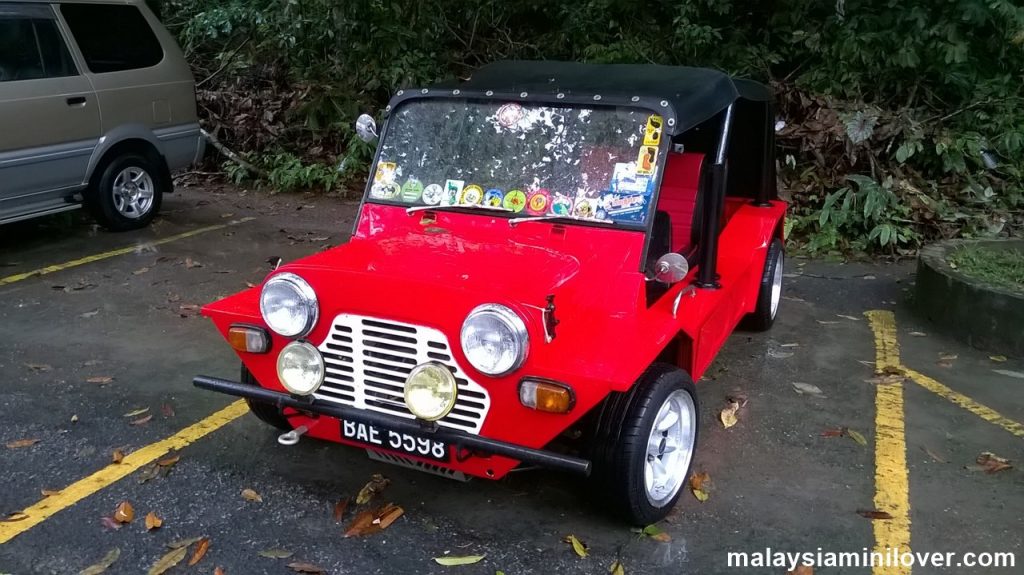
    Mini Moke red
    A reader of MalaysiaMiniLover sent us a few photos of a red hot Mini Moke. This Mini Moke looks very spicy because of the chilli red exterior. Far away, you can clearly see the car is fitted with 13 x 7 minilite sport wheels. It makes the car looks bigger and feel more stable on the ground. According to the owner, doing a complete colour change cost him a lot. It is also very time-consuming and a real hassle to rebuild the whole car.
    Mini Moke red
    Mini Moke was built in between 1964 and 1968. It appears in the Mini MK 1 generation. Originally, it was built for light off road usage, however, you see most of them are already on the road today as a classic car.
    Mini Moke interior
    On occasion the owner of this Mini Moke drives the car from his house to a recreation park. He doesn’t know how many miles he covers because the odometer has stopped working. See also: 1989 Mini Thirty (Mini 30)
    Mini Moke interior
    Underneath, this Mini Moke is powered by a 848cc engine which has a very good fuel consumption compared to the newer 1275cc engine. After all you can’t go too fast in a Moke, isn’t it? Suspension wise, the moke runs a standard fully rebuilt dry suspension but with gas shocks, nylon bushes and adjustable tie bars.
    Mini Moke
    Take a look at the interior, not much compared to a standard Mini deluxe because there is no door or hard roof. Two plastic front seats and a set of PVC rear seat. The reason the owner uses plastic front seats is to handle the heavy rain scene that always happen. Last but not least, check out this crazy fourteen seater Mini Moke!
    Mini Moke

  • 1979 Mini Pickup

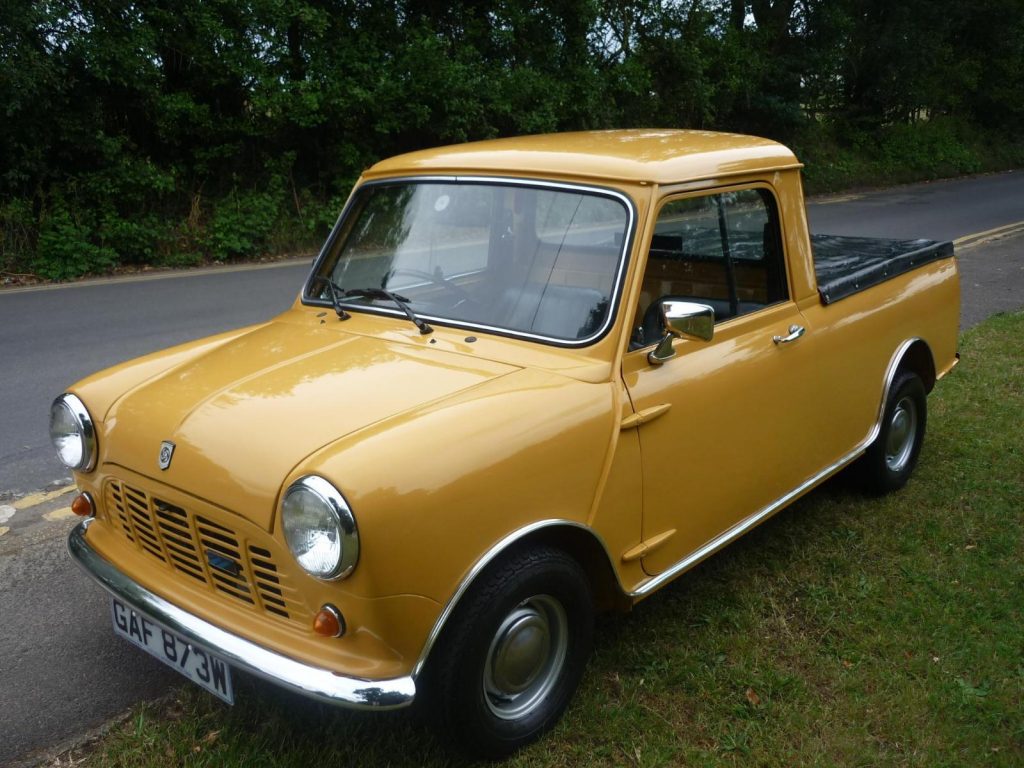
    Mini Pickup
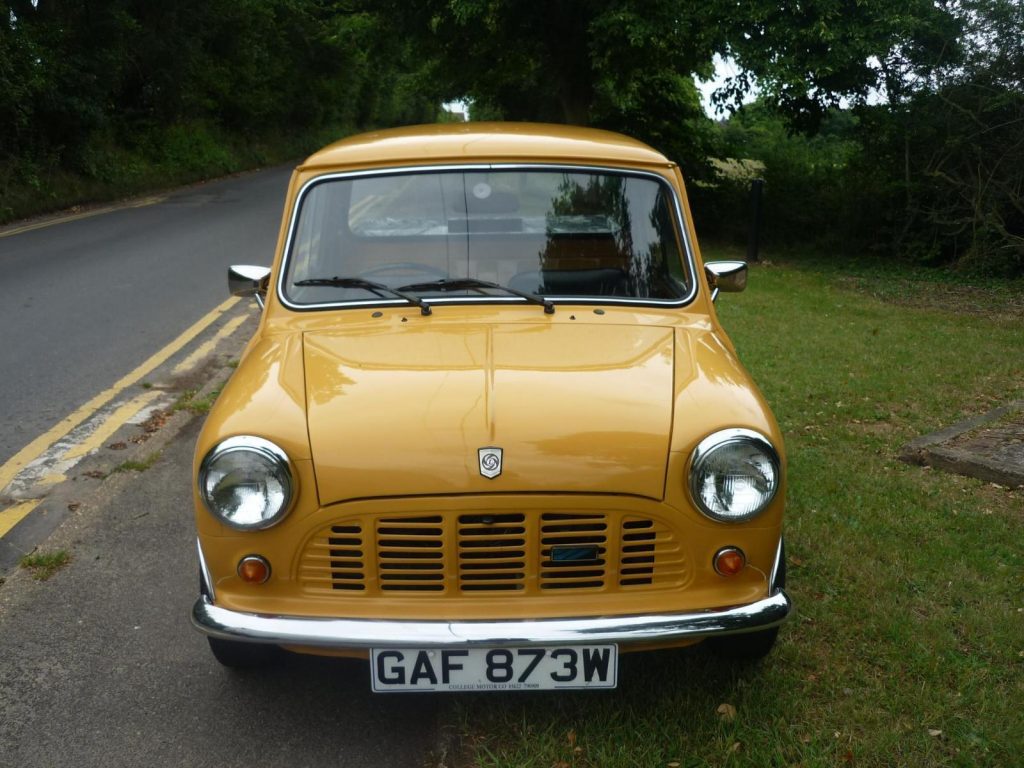
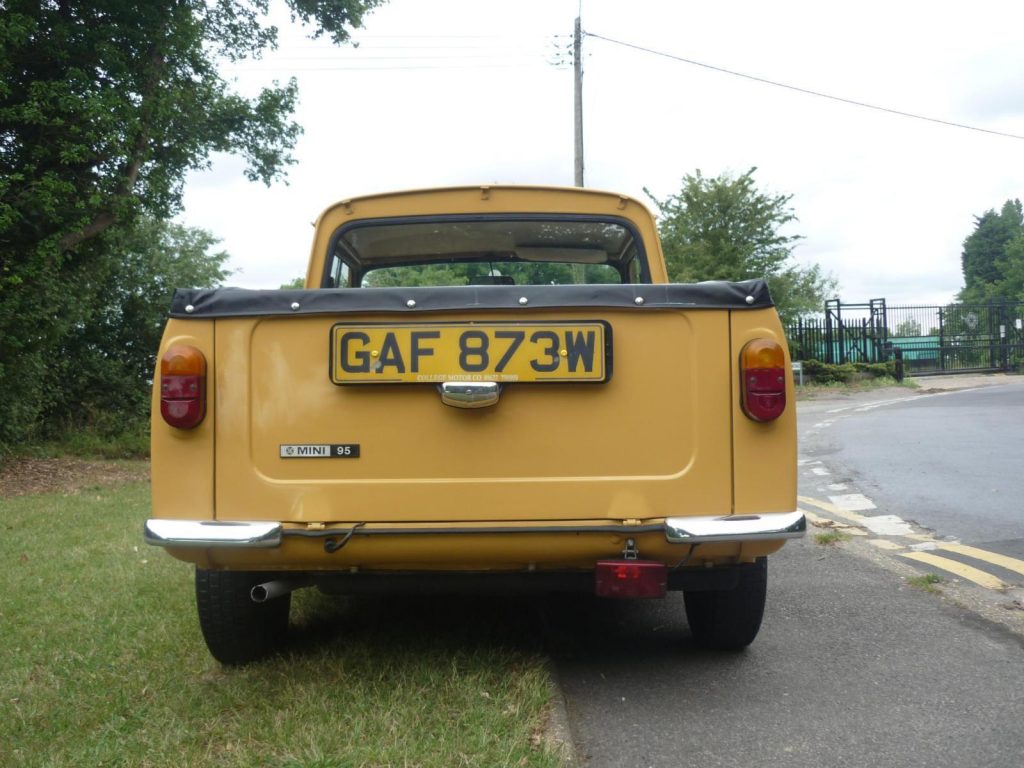
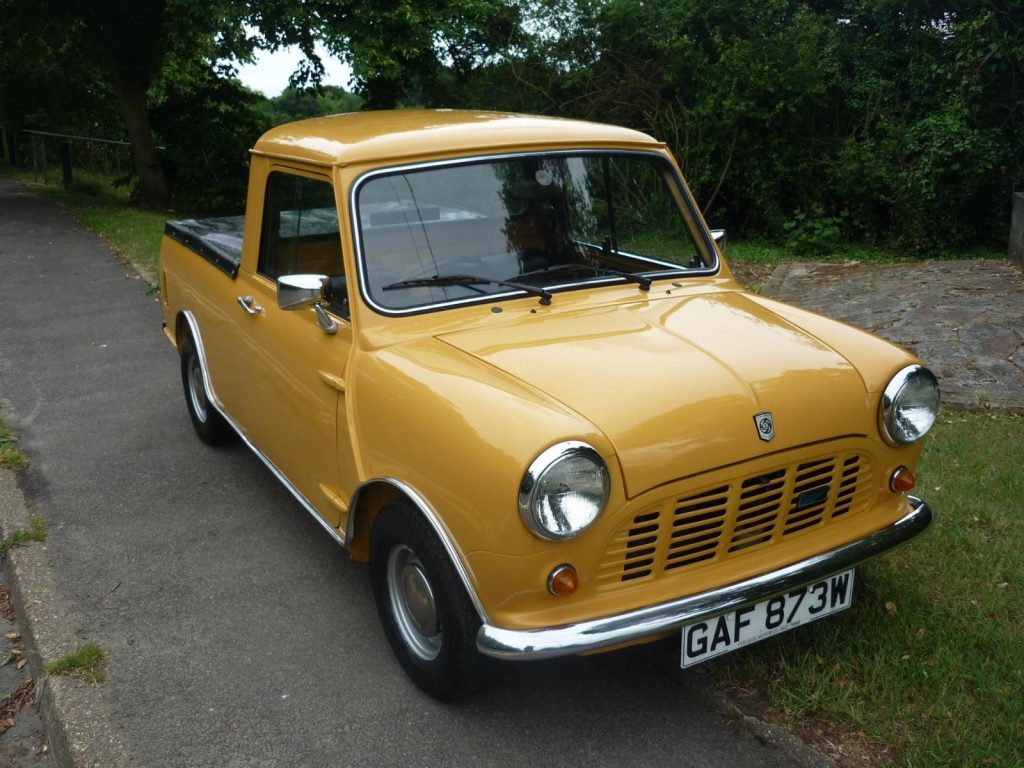
    Here’s a genuine 1979 Mini Pickup. This is a MK4 Mini Pickup. The exterior is almost similar to MK3/MKIII Mini but there are a few parts under the hood were upgraded. The first Mini Pick-up were introduced in 1961 under the production of Austin Seven Pick-up. The car utilized the same floor pan as the Austin Se7en and Morris Minivan but had a flat loading bay and self-contained cabin. The drop-down tailgate at the rear of the load bay is what makes this car a unique one in Mini Timeline & History.

    Mini Pickup
    Painted in yellow, the owner of this Mini Pickup tries to keep it as original as possible. A pair of stainless steel side mirror were added to the car to make it look shining.

    Mini Pickup
    Original 10-inch wheel with chrome center cap makes the car look like an old-new pickup truck in this era.

    Mini Pickup
    Gorgeous front look. Does it look like a normal MK1 Mini if you don’t see the tailgate?

    Mini Pickup
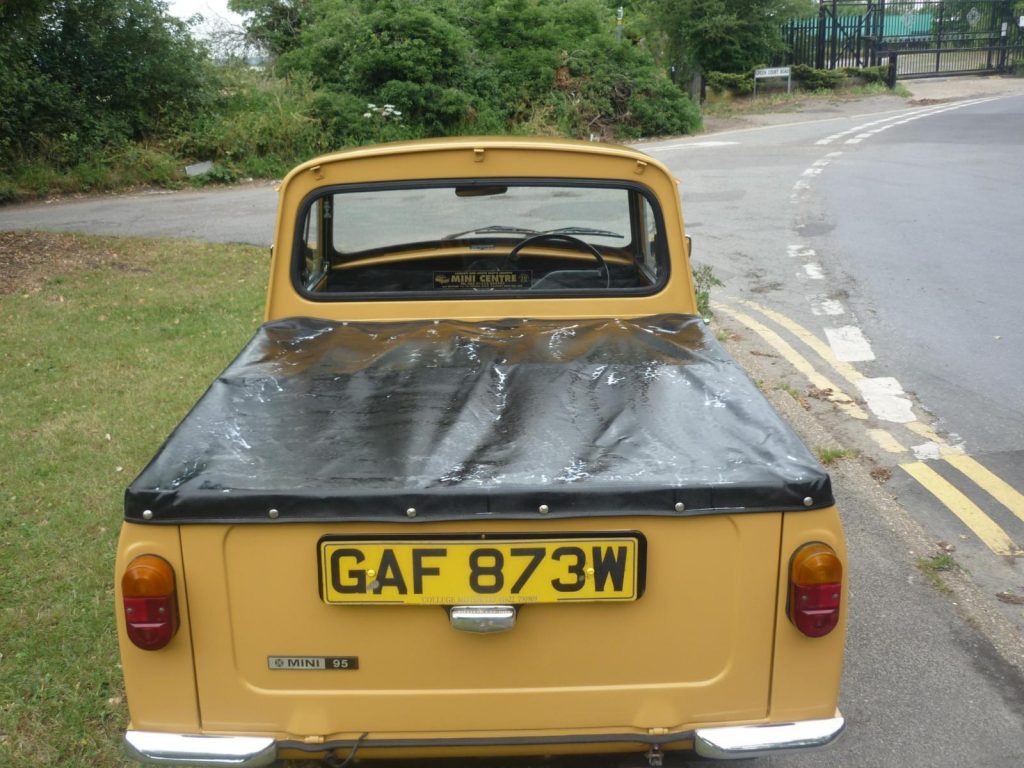
    A MINI 95 decal is added to the drop-down tailgate of this car.

    Mini Pickup
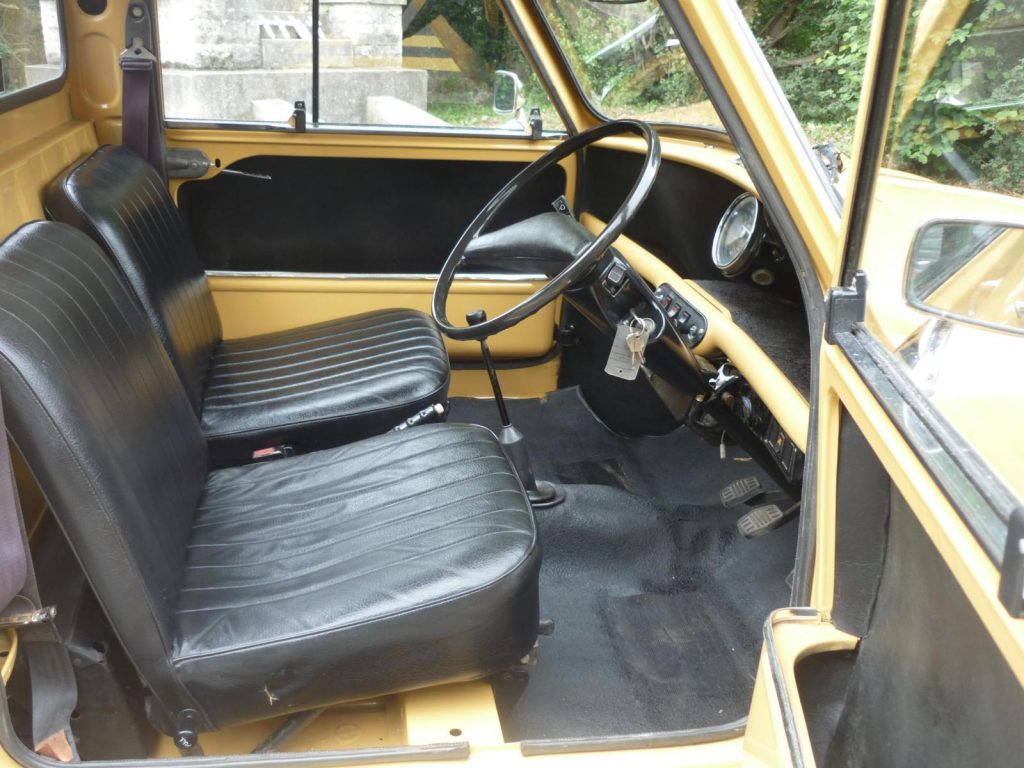
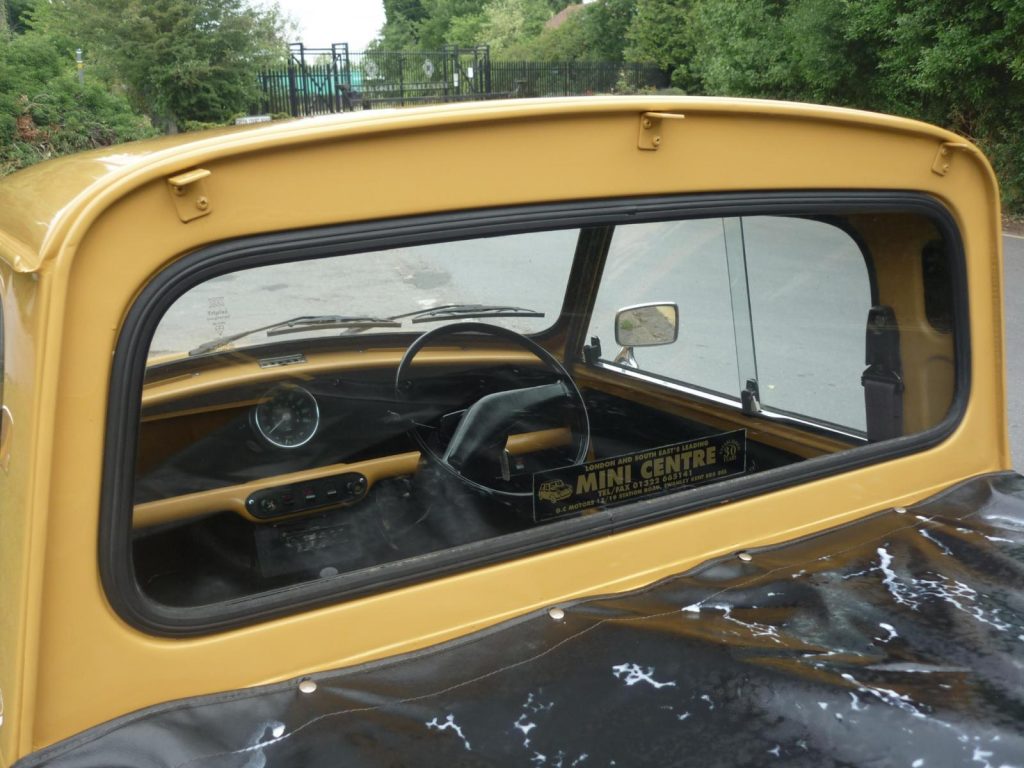
    Nice classic steering wheel and original Mini seat.

    Mini Pickup
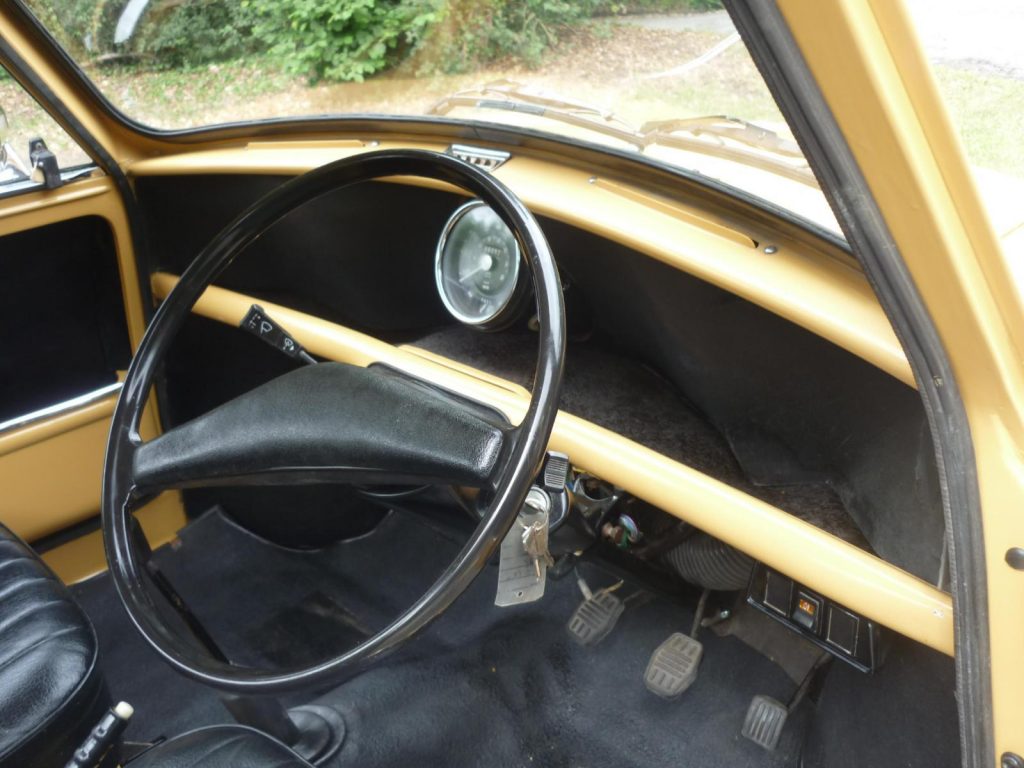
    It is nice to see the owner make the interior of a Mini as simple as possible. A center speedometer and a few important switches for wipers, headlamps, signals and etc. In fact, three pedals are what you need the most!

    Mini Pickup
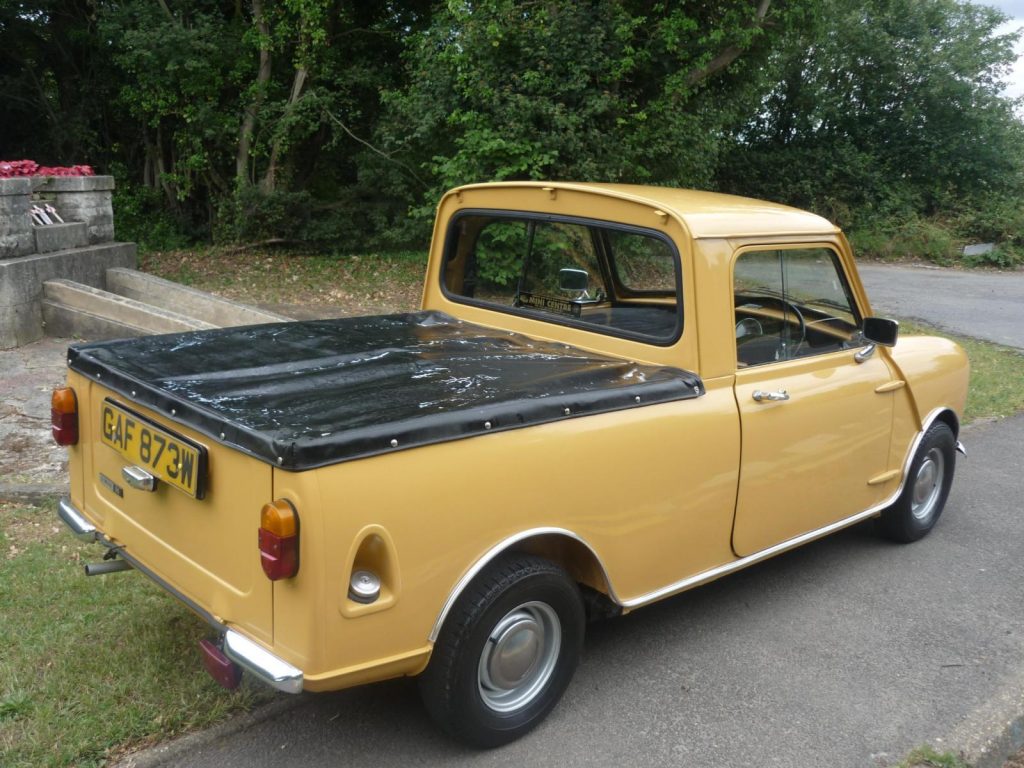
    A view from the back of the Mini Pickup.

    Mini Pickup
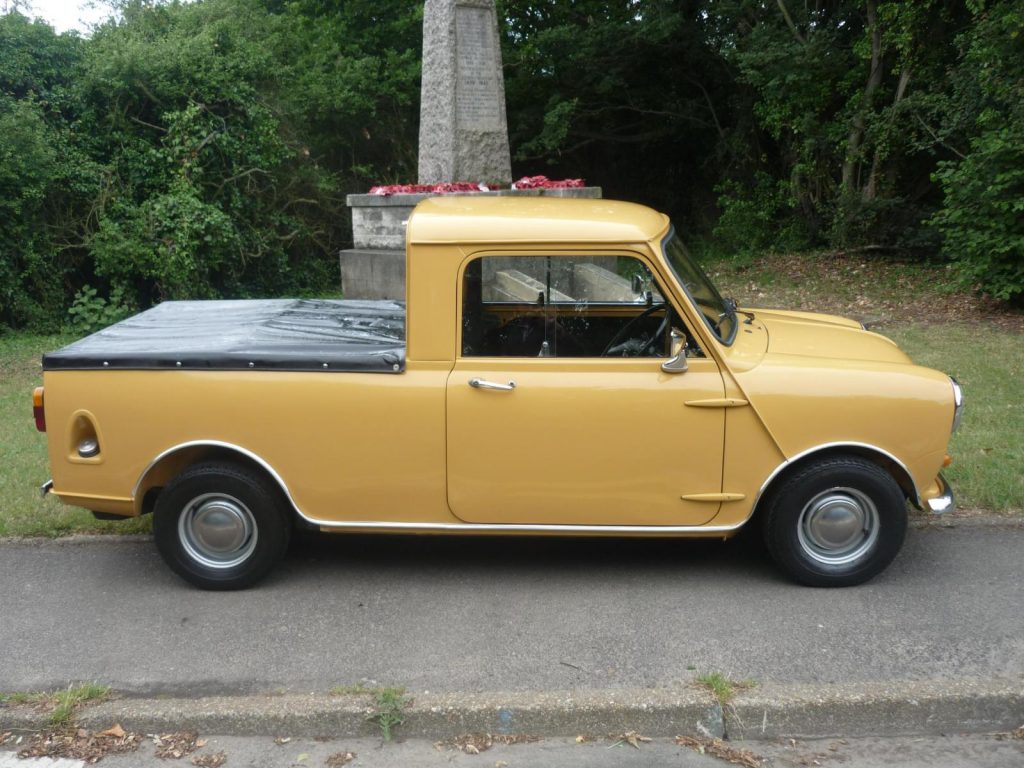
    Side view of the 1979 Mini Pickup.

    Mini Pickup
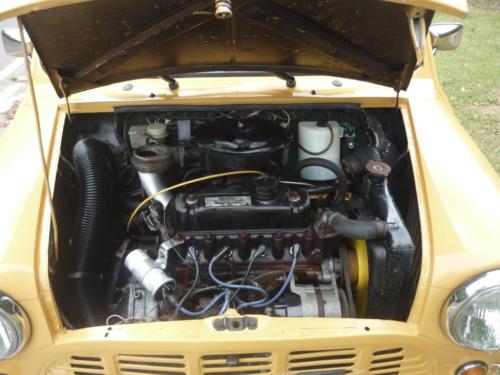
    Under the hood, this Mini pickup is powered by a 998cc engine.

    Mini Pickup
    Again, rear view of the car.

    Mini Pickup
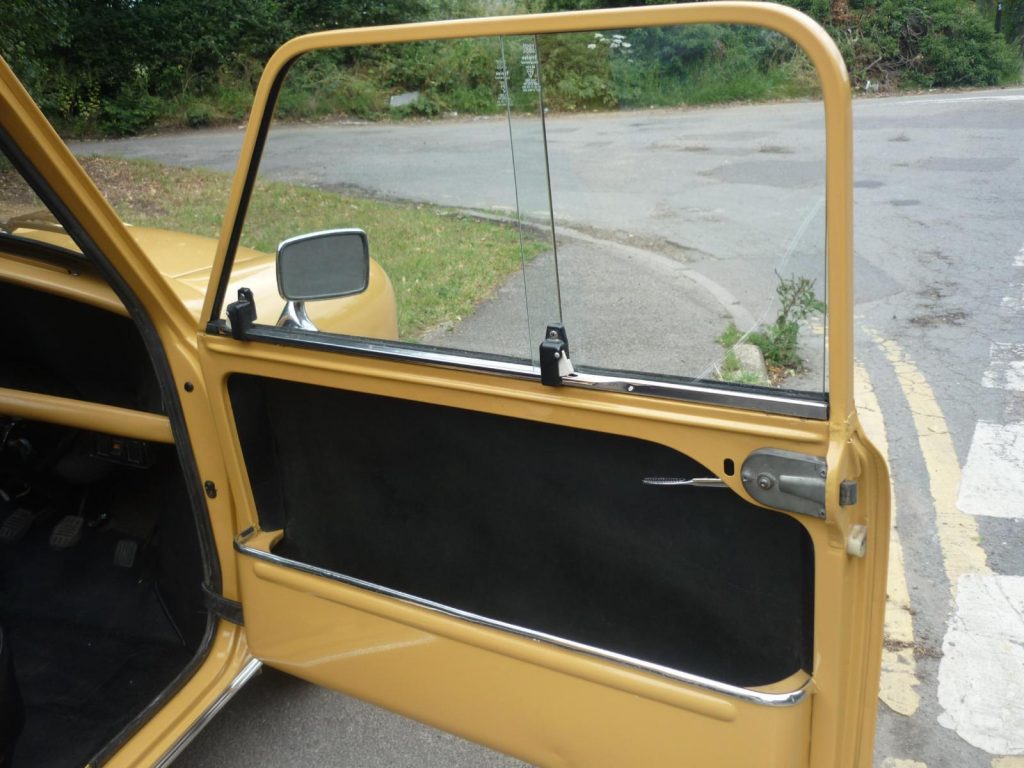
    Notice the sliding window? This looks exactly like a MK1 door.

    Last but not least, please don’t forget to leave a comment here if you have something to say about this beauty.

  • Honda Civic Air Conditioning Problems, Symptoms and Solutions

    I am writing this article to share the experience I had with my 2006 Honda Civic air conditioning problems. I sorted the root problem based on every symptoms the car gives and hunt for the best solutions. Honda Civic owners who face different kind of air conditioning problems should go through this article. I strongly believe that this article could save you hundreds of unwanted repair cost from untruthful dealers or mechanic.

    Last week, I was driving my Honda Civic from Northern Thailand to Southern Thailand, out of sudden, the car AC stops working. It blows only hot air. I parked the car and had a glass of coffee. The AC works again when I start the car. However, it blows hot air again after 1-2 minutes of cold air. This is definitely a weird symptoms to me. As a person who knows nothing about car, the only thing I can do is drive it to the nearest AC workshop. The mechanic, Chang, opened the car hood and did some checking with the gauges on his hand. He told me the air-cond gas is still full but the AC compressor is gone. The approximate price is $1,200 include labour charge. This sounds ridiculous to me because I remember I had just replace the compressor clutch and refill the gas a year ago. I decided to leave with it and go to another shop.

    Here comes another mechanic, Shyne, Shyne was a good man and he told me the AC compressor clutch works for 1-2 minutes then stop working. The compressor clutch is the metal plate attached to the compressor as shown in the image below. When you switch on the AC, it should be running/spinning.
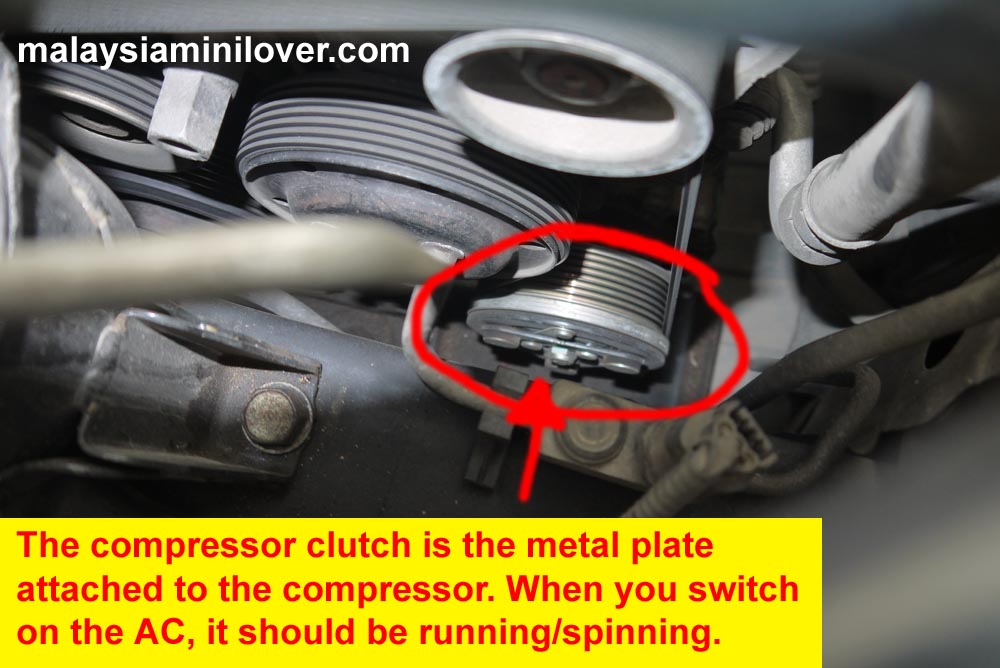
    Honda Civic compressor clutch

    In my case, it spins for a few minutes then stop working. It works again after a few minutes then stop working, again and again. After a 5-minute checking, Shyne told me the AC compressor, condenser and other parts are working fine. He told me that it was the AC compressor relay that giving the problem. The AC compressor relay is located at top right under the car hood. Please refer to the image below.
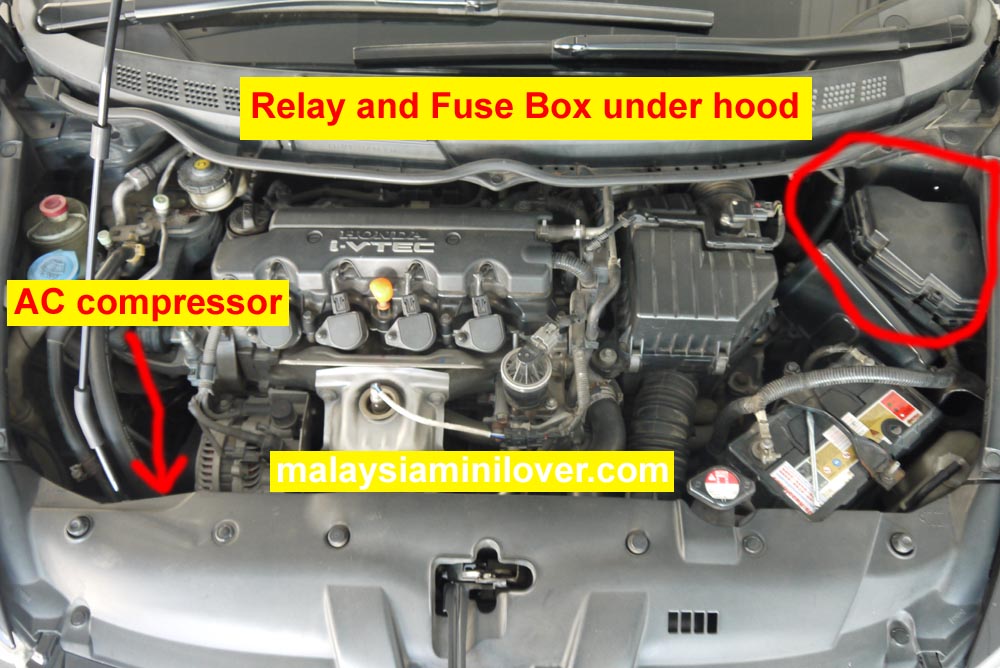
    Honda Civic compressor relay and fuse box

    Once you opened it, you will see a few relay and fuses (see also Honda Civic Fuse Diagram). The AC compressor relay is the one circle in red in the image below. The original relay from Honda is MITSUBA brand, made in VIETNAM. In order to test if it is the relay that cause the problem, you can always switch other relay (similar readings) to the one circle in red. Once switched, you will know if it is the problem. Bingo! It is!

    Honda Civic compressor relay

    In Thailand, there are options to go for Omron or Denso relay. Personally I am more to Denso therefore I bought a brand new DENSO relay at only 100 baht ($3 dollars). It is made in Thailand and that could be the reason why it is cheap.

    Honda Civic compressor relay original and denso

    A special tool is needed to remove the AC compressor relay. However, you can use a flat screwdriver to remove it. Make sure you remove it gently.

    Honda Civic compressor relay

    This is how my under hood fuse box look like with the new DENSO AC compressor relay (the one in blue). Now my Honda Civic air conditioning is working again and all I spent is just $3 instead of $1,200. Always check your relay, fuses and wiring related parts if your AC is not working. Do not simply believe untruthful mechanic because Honda Civic air conditioning compressor is something could last for at least 6-12 years (or 150,000-180,000 km).
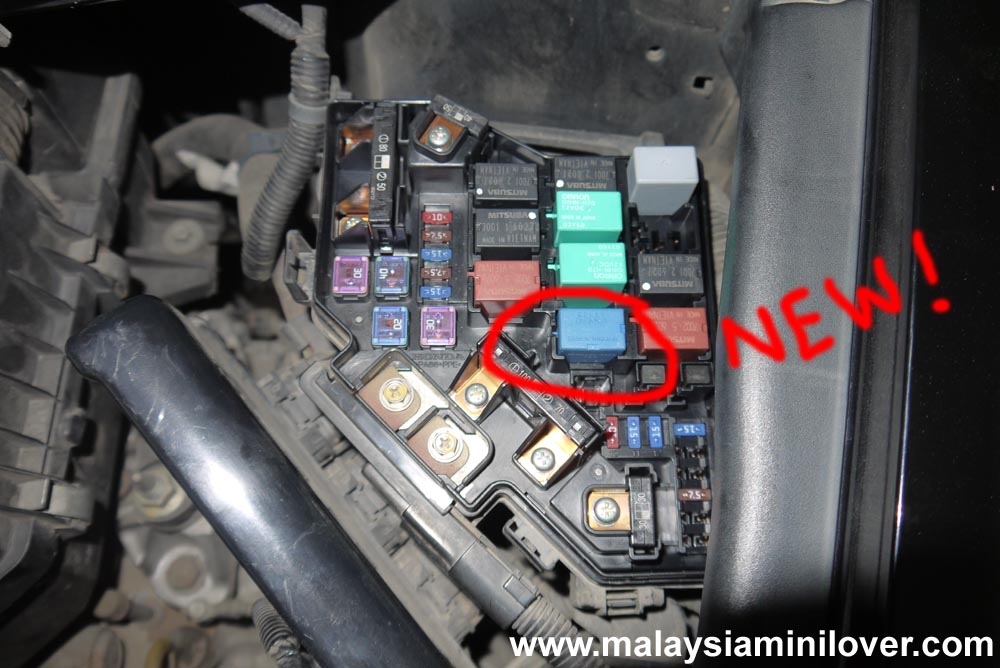
    Honda Civic compressor relay

    See also: Honda Civic Engine Vibrates in Parking Reverse Transmission, 2007 Honda Civic Fuse Diagram and Honda Civic: It still smells new after runs for one hundred thousand km in five years.

    This article is written and submitted by Somchai Songsakul, from Thailand. Please use the Write For Us page if you would like to submit an article to MalaysiaMiniLover.com.